Welcome to Massage Educator, a resource created exclusively for massage schools and instructors. Each newsletter is filled with classroom tools and activities, important industry information, and links to ABMP resources created for schools and instructors.
Want to know more about how ABMP supports schools, educators, and students? Contact us at education@abmp.com.
Current Issue
2025 Issue 1
- Six Hallmarks of Effective Entry-Level Education
- Student Activity: Cement the Material—Student Lecture Response (download your form)
- Classroom Idea: Help Students See the Bigger Community Through Massage Is for EveryBody
- Scholarships for Your Students and School
- Meet the ABMP Team
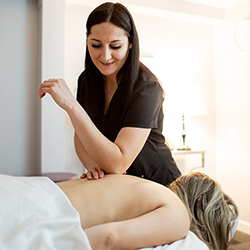
Six Hallmarks of Effective Entry-Level Massage Education
How Does Your School Rank?
By Jimmy Gialelis, LMT, BCTMB
As an educator in the massage and bodywork field, I have been fortunate to teach in both entry-level and continuing education settings. Observing graduates of varying massage programs nationwide, it becomes quickly evident who attended an effective and comprehensive entry-level program and who did not. Here are six hallmark traits of effective entry-level massage education programming. How does your program stack up?
1. Finding Balance Between Private Practice and Employee Emphasis
A massage therapist needs some business acumen to successfully operate a private practice. Understanding business practices involving client care, finances, budgeting wants versus needs, communication skills, licenses of all types for a region (city, county, state, etc.), and client management are all elements of running a private practice that should be covered in your program.
Yet, it is equally important to recognize not all students will be ready for a private practice upon graduation. Therefore, presenting skills to help therapists work effectively within an employee setting will also be key within program curriculum. Time management, elements of working in team settings, pay expectations, and hands-on and ethical skills will be key to employment success.
2. Continued Teacher Training and Support
Teachers of entry-level education need training in pedagogy (the method and practice of teaching dependent learners) and andragogy (the art or science of teaching adult learners). Being an effective massage therapist does not necessarily equate to being an effective teacher of massage. Very few MTs have earned an education degree; that’s why support from schools that hire them to teach is so critical.
The transition from the treatment room to the classroom can seem daunting for new teachers. Topics to include in teacher training and support include classroom management, communication skills, best practices with content presentation, familiarity of audio-visual-online equipment, and teaching to varying learning levels and styles.
Pro Tip: Cornerstones: The ABMP Instructor Development Program is available to anyone in the profession, and free to all ABMP members and instructors at ABMP Premier schools. This comprehensive training course offers best instructional practices, with content relevant to both new and tenured teachers. Learn more at abmp.com/cornerstones.
3. Focus on Fundamentals
Ensuring students receive a solid foundation and comprehension of the fundamental skills of massage therapy is essential for graduate success. Foundational skills include draping, table-side manner, body mechanics, ability to conduct a client intake, understanding location and function of muscles, and session modifications to better serve client needs.
The therapeutic relationship becomes the basis of client-therapist interaction. Understanding elements of this relationship will help graduates navigate through ethical dilemmas pertaining to issues of transference, countertransference, dual relationship, informed consent, right of refusal, and scope of practice.
4. Presenting Self-Care Practices
Self-care is an essential element for the successful MT. Career longevity is a concern, especially when performing deep-pressure therapies. Some teachers have chosen to include daily self-care practice within their curriculum, either at the beginning or end of class sessions. Other teachers have facilitated entire courses devoted to presenting ideas therapists can employ for self-care.
This concept can be easily incorporated as we remind students of transference and countertransference. Clearing and grounding practices are key to include in self-care lessons.
5. Connections Within Local Massage Communities
As entry-level students become licensed massage therapists, opportunities for placement and private practice-building will become key. When entry-level schools create professional connections and relationships with local members of the massage community, the camaraderie and assistance offered provides further education for the newly graduated therapist.
6. Repetition of Fundamentals Throughout Advanced Courses
Finally, ensure fundamental massage therapy practices are reiterated throughout an entire program. Students can easily forget the fundamentals after having advanced content presented. Since repetition is the mother of learning, effective curricula revisit fundamentals such as draping and modifying sessions to meet unique client needs.
Entry-level programs that foster these hallmark traits will provide their graduates with a solid foundation from which to practice; helping graduates gain an appreciation of the noble nature of the work augments this foundation.

Cement the Material: Student Lecture Response
Download your "Lecture Response Form" for Students
During lectures, new terms are introduced, concepts are connected, and layers of understanding are forged. If we don't help students engrain all that information, it can easily slip into the "it's somewhere in my notes" information versus the "it's cemented in my long-term memory" information.
The solution? Keep students engaged by letting them know they will be asked to think critically about what they just learned at the end of the lecture.
You can try this from a few approaches:
1. Have students complete one or more of the following prompts:
- The amazing thing about this is...
- With this information I can...
- Now I understand that...
- This information will help me to...
2. Have students complete the following questions to identify areas of confusion after a lecture. To help you refine your lecture for subsequent classes, and to ensure your current cohort is all on the same page, ask:
- What questions do you have regarding the content covered in today's lecture?
- Are there areas of today's content that are unclear to you?
- Do you have a good understanding of the new terms introduced today?
Both approaches require students to stay engaged with the material as it's being presented, knowing they'll be asked to respond to it after the lecture. If all you ask students to do during lectures is listen, then listeners is what you'll get. Ask students to be thinkers instead.
Massage Is for EveryBody
Great Classroom Ideas
Help Students See the Bigger Community
When bogged down in heavy anatomy and kinesiology coursework, students can sometimes forget where their education is taking them: into a heart-centered profession that helps people.
If your students need an inspirational reminder about all that awaits them after graduation, send them over to ABMP's Massage Is for EveryBody page where they can:
- Explore five guiding principles behind the yearlong Massage Is for EveryBody mission.
- See the good work others are doing in the profession, from working with underserved communities to offering end-of-life care to caring for caretakers.
- Enter to win a $1,000 grant awarded to 10 individuals in the manual therapies community each year who follow the mission's guiding principles.
- Celebrate this year's Massage Is for EveryBody week, July 20–26, by volunteering, fundraising, or getting the community involved.
Instructions: Direct students to abmp.com/massage-week-intro.
- Read the "Guiding Principles" behind the Massage Is for EveryBody mission. (1 min)
- Read through a few winning essays from previous grant winners to learn how others contribute massage and bodywork to their communities. (5 min)
- Visit the "Get Inspired" page for dozens of ideas on how others participate in Massage Is for EveryBody week each year. (2 min)
- Ask students to spend a few minutes brainstorming on a piece of paper the ways they could participate in Massage Is for EveryBody in their communities, either as part of the weeklong celebration or in bigger ways all year long. Have them circle their favorite idea before turning it in. (5 min)
LEARN MORE ABOUT MASSAGE IS FOR EVERYBODY WEEK AT WWW.ABMP.COM/MASSAGE-WEEK-INTRO
Scholarships for Your Students and Your School
ABMP is committed to giving back to the massage and bodywork community, from free education offered in our annual CE Summit events to our Massage Is for EveryBody campaign to support for instructors, students, and schools. That's why we're thrilled to introduce our newly reimagined ABMP Student Scholarship Program, designed to better support both massage therapy students and the schools that help shape their futures!
Your students can enter to win a quarterly $5,000 scholarship giveaway—and your school will also have the opportunity to win $5,000 each time a student is selected.
Here's how it works:
- Quarterly drawings: Students can register every three months for a chance to win.
- Double the rewards: Each winning student receives $5,000, and their school gets $5,000 too.
The first winners of 2025 will be announced in April.
Here's how to get started:
- Guide students through the registration process at abmp.com/scholarship.
- Encourage every new program start to sign up as soon as their courses begin.
- Repeat each quarter!
This initiative celebrates the vital role massage therapy schools play in building a thriving profession. For more information regarding our school support, or to receive additional scholarship materials, contact us at education@abmp.com or 800-458-2267.
LEARN MORE ABOUT THE ABMP STUDENT SCHOLARSHIP PROGRAM AT ABMP.COM/SCHOLARSHIP
Need Help With Student Resources or Exam Prep Tools?
ABMP has what you need! ABMP School membership includes a variety of resources for students, as well as lesson plans, tools, and presentations to help your faculty and students succeed. Learn more at abmp.com/educators or email our school liaisons at education@abmp.com with your questions.

Amber Edwards
AmberE@abmp.com
800-458-2267, ext. 1613
Areas Covered: Alaska, Arizona, California, Colorado, Connecticut, Delaware, D.C., Hawaii, Idaho, Maine, Maryland, Massachusetts, Montana, Nebraska, Nevada, New Hampshire, New Jersey, New Mexico, New York, North Dakota, Oregon, Pennsylvania, Rhode Island, South Dakota, Utah, Vermont, Washington, West Virginia, Wyoming

Brian Sinclair
Brian@abmp.com
800-458-2267, ext. 1633
Areas Covered: Alabama, Arkansas, Florida, Georgia, Illinois, Indiana, Iowa, Kansas, Kentucky, Louisiana, Michigan, Minnesota, Mississippi, Missouri, North Carolina, Ohio, Oklahoma, Puerto Rico, South Carolina, Tennessee, Texas, US Virgin Islands, Virginia, Wisconsin